

On November 5, 2026, the Minister of Finance and National Revenue, the Honourable François-Philippe Champagne,…
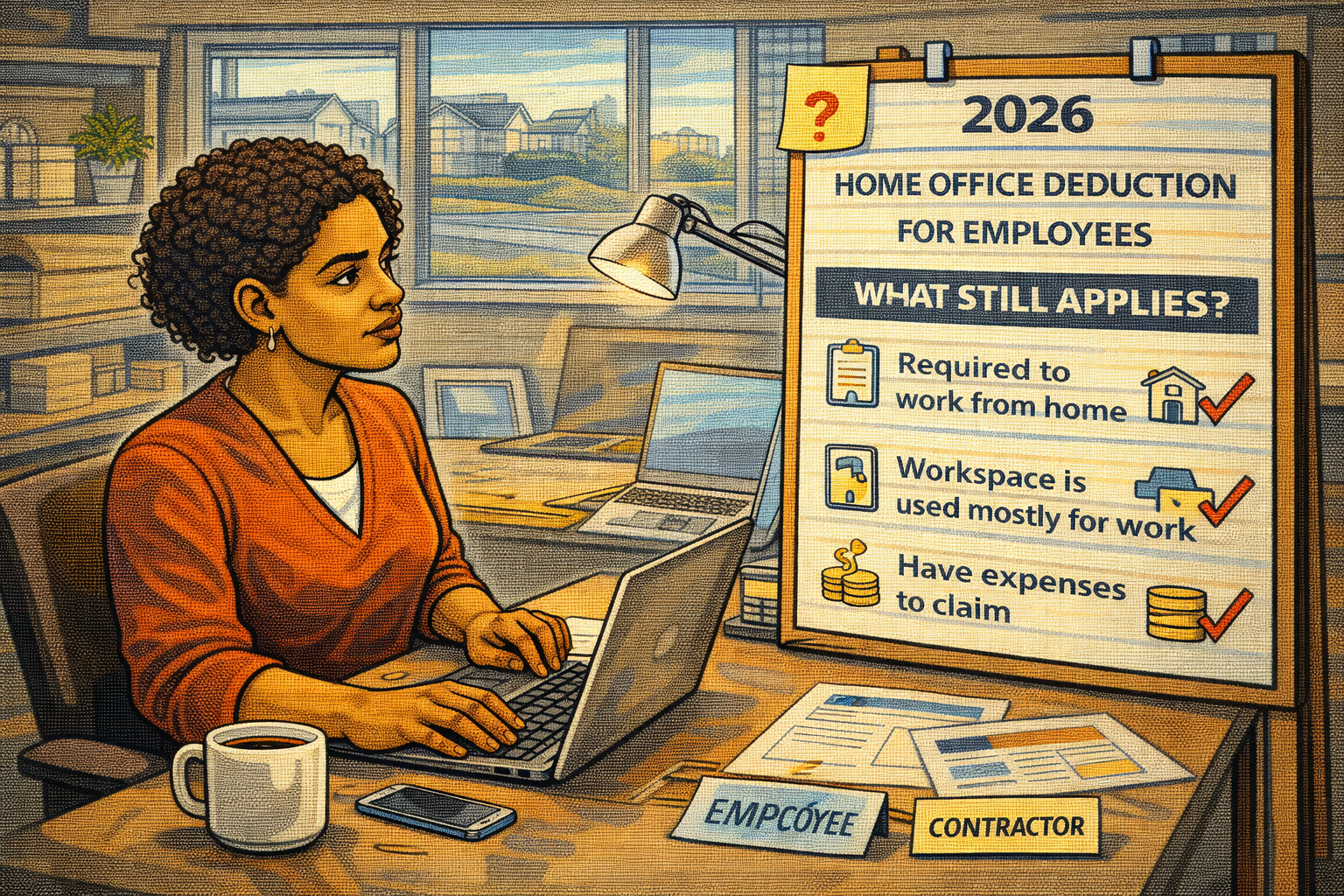
Home Office Deduction for Employees in 2026: What Still Applies?
During the pandemic years, many employees claimed home office expenses using simplified methods.
That era has largely ended.
In 2026, the home office deduction for employees is governed strictly by:
- Income Tax Act (ITA) s.8(13)
- CRA Guide T4044 – Employment Expenses
If you are an employee — not a self-employed individual — the rules are narrow, technical, and documentation-heavy.
Let us clarify what still applies.
First Principle: Employees Cannot Deduct Everything
Unlike business owners, employees may only deduct expenses that are specifically permitted under the Income Tax Act.
ITA s.8 lists allowable employment expenses.
ITA s.8(13) governs home office deductions.
If you do not meet its conditions, the deduction is denied.
Two Core Tests Under ITA s.8(13)
To claim home office expenses as an employee, you must meet one of the following:
- Principal Place of Employment Test
Your workspace in the home is where you principally perform (more than 50%) of your employment duties.
OR
- Exclusive Use and Meeting Clients Test
Your workspace is used exclusively to earn employment income and is used on a regular and continuous basis for meeting clients or customers.
If neither applies, the deduction fails.
The “More Than 50%” Rule
For most employees, the principal place of employment test is key.
You must work from home:
More than 50% of the time for a period of at least four consecutive weeks.
Occasional remote work is insufficient.
Hybrid arrangements must be evaluated carefully.
Mandatory Employer Certification: Form T2200
Even if you qualify under ITA s.8(13):
You must obtain a signed Form T2200 (Declaration of Conditions of Employment) from your employer.
Without it:
The deduction is denied.
The employer must certify that:
- You were required to work from home
- You paid certain expenses
- The expenses were not reimbursed
This is not optional.
What Expenses Can Be Claimed?
Under CRA Guide T4044, eligible home office expenses for employees may include:
- Rent (if renting your home)
- Utilities (heat, electricity, water)
- Internet access fees (portion related to work)
- Maintenance and minor repairs
- Home insurance (if commission employee)
- Property taxes (if commission employee)
Employees generally cannot deduct:
- Mortgage interest
- Capital cost allowance (CCA)
- Principal mortgage payments
Self-employed individuals follow different rules.
Allocation Method
Expenses must be allocated based on:
- Workspace area as a percentage of total home area
- Time used for employment versus personal use
For example:
If your workspace is 10% of your home and used 50% of the time for work:
Deductible portion = 5% of eligible expenses.
Documentation must support the calculation.
Commission Employees: Additional Deductions
Commission employees may deduct additional expenses under ITA s.8(1)(f), including:
- Property taxes
- Insurance
However, they must:
- Earn commission income
- Meet specific statutory conditions
- Have employer certification
Not all employees qualify.
What No Longer Applies
The temporary “flat rate” method introduced during COVID is no longer available in 2026.
Employees must now:
- Calculate actual expenses
- Maintain records
- Obtain T2200 certification
Simplified methods are gone.
Interaction With Reimbursements
If your employer reimburses you for expenses:
You cannot deduct that amount.
Only unreimbursed eligible expenses qualify.
Double-dipping is prohibited.
Common Audit Risks
CRA frequently reviews:
- Lack of T2200 form
- Inconsistent square footage calculations
- Claiming mortgage interest
- Claiming CCA (which may affect principal residence exemption)
- Overstated business-use percentages
Documentation discipline protects the deduction.
Principal Residence Implications
Employees should avoid claiming CCA on their home.
Claiming CCA may:
- Affect principal residence exemption eligibility
- Trigger capital gains exposure later
For most employees, CCA is not available — and not advisable.
Example Scenario
You rent your home.
Annual rent: $30,000
Utilities: $3,600
Internet: $1,200
Workspace is 12% of total home.
Used 60% of the time for work.
Deductible percentage: 12% × 60% = 7.2%
Eligible deduction:
($30,000 + $3,600 + $1,200) × 7.2% = $2,491.20
Only if all statutory conditions are met.
For Family-Owned Enterprises
In family businesses, employees may:
- Work from home part-time
- Receive corporate reimbursements
- Share workspace
Each scenario must be analyzed under ITA s.8(13).
Clear policies reduce risk.
Common Misunderstandings
“If I work from home occasionally, I qualify.”
Not necessarily.
“Everyone working remotely can claim.”
Only if statutory tests are met.
“Mortgage interest is deductible.”
Not for employees.
“Employer confirmation is optional.”
It is mandatory.
Strategic Considerations for 2026
Before claiming the deduction, confirm:
- You meet the 50% threshold
- You have employer certification
- Expenses are properly allocated
- You have supporting documentation
- No reimbursement was received
The deduction is legitimate — but narrow.
Final Thoughts
Under ITA s.8(13), home office deductions for employees remain available — but only under strict conditions.
CRA Guide T4044 provides calculation guidance.
In 2026, this is no longer a casual claim.
It is a statutory deduction requiring documentation and compliance.
For professionals and family enterprise employees, clarity matters.
Tax law rewards discipline.
At Shajani CPA, we advise with statutory precision and practical foresight.
Tell us your ambitions, and we will guide you there.
This information is for discussion purposes only and should not be considered professional advice. There is no guarantee or warrant of information on this site and it should be noted that rules and laws change regularly. You should consult a professional before considering implementing or taking any action based on information on this site. Call our team for a consultation before taking any action. ©2026 Shajani CPA.
Shajani CPA is a CPA Calgary, Edmonton and Red Deer firm and provides Accountant, Bookkeeping, Tax Advice and Tax Planning service.

Related Posts